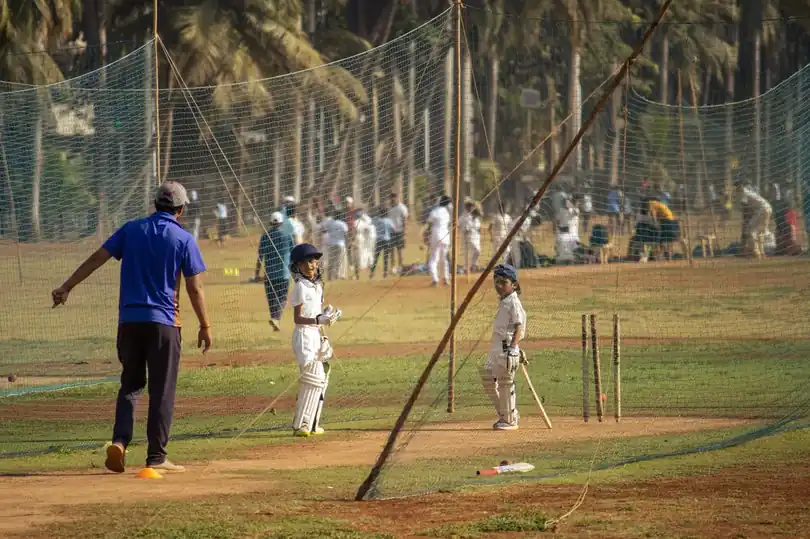
Why Footwork Matters for Every Batsman
Good footwork is the foundation of a confident stroke‑maker. It lets you get into the right position, play with balance, and handle both pace and spin. In the bustling grounds of Lucknow and across Uttar Pradesh, many young players struggle not because they lack talent, but because they cannot afford specialised coaching or high‑tech nets. The good news is that the core of footwork can be honed with nothing more than a flat surface, a few markers, and a clear plan.
Understanding the Basics of Batting Footwork
Before diving into drills, grasp the three pillars of effective footwork:
- Alignment: Your front foot should point towards the ball’s line of delivery, while the back foot provides a stable base.
- Weight Transfer: Shift your weight smoothly from the back foot to the front foot to generate power.
- Timing: Move your feet early enough to meet the ball at the optimal point of contact.
These concepts can be practiced anywhere – a school playground, a community ground, or even a quiet street in Lucknow.
Equipment‑Free Footwork Drills You Can Start Today
1. Shadow Batting (No Ball Required)
Shadow batting is the simplest way to embed footwork patterns. Follow these steps:
- Mark a 5‑meter line on the ground with chalk or a piece of rope.
- Stand at one end, bat in hand, and imagine a bowler delivering a delivery.
- Move forward, back, or sideways as you would against a real ball, focusing on the alignment of your feet.
- Repeat the sequence for different deliveries – full‑toss, yorker, and a short ball.
Do three sets of 30 seconds, resting 20 seconds between sets. The key is to keep the movement fluid and to visualise the ball’s trajectory.
2. The “Cone Shuffle” Drill
You only need four small cones or even rolled‑up socks.
- Place the cones in a square, each side about 2 metres apart.
- Start at the centre with your bat held upright.
- When you hear a count of “1‑2‑3”, sprint to the nearest cone, plant your front foot, and simulate a forward defensive shot.
- Return to the centre, then repeat towards a different cone, mimicking a pull or a drive.
This drill trains quick direction changes and teaches you to reset your stance after each shot.
3. The “Rope Ladder” Footwork Pattern
If you don’t have an agility ladder, lay a sturdy rope on the ground in a straight line, spaced about 30 cm apart.
- Walk the rope forward, placing each foot inside a square – this is the classic “in‑and‑out” drill.
- Progress to side‑step movements, crossing one foot over the other while staying within the rope.
- Finish with a forward‑backward sprint, focusing on landing on the balls of your feet.
Perform 4‑5 minutes of this drill daily to improve agility and foot placement precision.
4. The “Target Line” Drill Using Chalk
Mark three parallel lines on the ground – a central line (the ideal batting line) and two side lines 1 metre apart.
- Stand behind the central line, bat ready.
- Imagine a ball pitched on each side line and move your front foot to meet the imagined line before playing a shot.
- Focus on keeping your hips square and your shoulders aligned with the target line.
Repeat for 10 balls per side, alternating sides. This drill builds the habit of moving the front foot toward the line of the delivery.
5. “One‑Ball‑One‑Foot” Drill with a Tennis Ball
A cheap tennis ball can substitute for a cricket ball when practising footwork.
- Partner or a wall can be used to bounce the ball.
- Each time the ball is tossed, step forward with the front foot, play a defensive stroke, then reset.
- Gradually increase the distance you move forward – start with a short stride, then extend to a full-length drive stance.
This drill reinforces the connection between foot movement and shot execution without the need for expensive cricket balls.
Structuring a Weekly Footwork Routine
Consistency beats intensity. Here’s a simple schedule you can follow alongside school studies:
- Monday – Shadow Batting + Rope Ladder: 15 minutes total.
- Tuesday – Cone Shuffle + Target Line: 20 minutes.
- Wednesday – Rest or light stretching: Prevents overuse injuries.
- Thursday – One‑Ball‑One‑Foot + Shadow Batting: 20 minutes.
- Friday – Full Circuit (all drills): 30 minutes, focusing on speed.
- Saturday – Match Simulation: Play a net session or a friendly match, consciously applying the footwork learned.
- Sunday – Review & Video: Record a short video of your footwork and compare with online tutorials.
Adjust the timings based on school commitments. The aim is to keep each session under 30 minutes, making it easy to fit into a busy student’s routine.
Common Mistakes and How to Fix Them
Skipping the Warm‑Up
Jumping straight into footwork can lead to ankle strains. Begin every session with 5 minutes of dynamic stretches – high knees, leg swings, and ankle circles.
Over‑thinking the Technique
When you focus too much on perfect form, speed suffers. Start slow, master the movement, then gradually increase tempo.
Ignoring the Back Foot
Many young players only move the front foot. Remember, a stable back foot provides balance and power. Incorporate back‑foot pivot drills by rotating on the ball of the back foot while keeping the front foot planted.
Tracking Progress Without Fancy Gadgets
Use a simple notebook or a free spreadsheet on your phone. Record:
- Date and duration of each drill.
- Number of repetitions completed.
- Subjective rating of comfort (1‑10).
- Any observations – e.g., “felt unstable on side‑step”.
Review the log weekly. Small improvements, such as a one‑second reduction in transition time, indicate real progress.
Bridging Skill Development and Financial Access
While these drills can be done with chalk and a rope, regular coaching, proper nets, and video analysis often require resources that many families in Lucknow and the broader UP region find hard to afford. If you find it challenging to join a professional academy or pay for private sessions, consider exploring scholarship options that support talented players.
How a Scholarship Can Accelerate Your Journey
Eligibility for a Lucknow Cricket Scholarship typically includes:
- Age between 12 and 20 years.
- Demonstrated commitment to cricket through school or club participation.
- Basic academic standing (to ensure a balanced development).
- Submission of recent performance videos and a short personal statement.
The scholarship may cover:
- Monthly coaching fees at a recognised academy.
- Access to indoor nets during monsoon months.
- Equipment kits (bat, gloves, protective gear).
- Travel allowance for district‑level tournaments.
Remember, the selection process is competitive, so keep your footwork drills sharp and your performance logs up‑to‑date. For the latest eligibility details, always verify with the official organisers.
Next Steps for Aspiring Batsmen
1. Start the drills today. Choose a quiet spot, set up your cones, and commit to the weekly schedule.
2. Document your journey. Use a phone camera to capture each session; this footage will be valuable for scholarship applications.
3. Connect with local coaches. Even a single free session at a community ground can provide feedback on your footwork.
4. Explore scholarship support. Want to pursue this pathway but cannot afford regular coaching? Eligible players can apply for Lucknow Cricket Scholarship. Call +91 9695934706 for guidance on the application process.
Conclusion – Consistency Beats Cost
Improving batting footwork does not demand expensive gear; it demands intention, structured practice, and a willingness to self‑analyse. By integrating the drills above into a manageable routine, you’ll build the balance, timing, and confidence needed to face both swing and spin on any pitch in Uttar Pradesh. And when you’re ready to take the next step, scholarship‑supported coaching can bridge the gap between talent and opportunity, ensuring that financial constraints do not hold back your cricketing dreams.